


- All
- Product Name
- Product Keyword
- Product Model
- Product Summary
- Product Description
- Multi Field Search
 |
Industrial/Coating Grade, ≥99.5%
Royalchem
763-69-9
| Product Name | Ethyl 3-Ethoxypropionate (EEP) Synonyms: 3-Ethoxypropionic Acid Ethyl Ester; Ethyl 3-Ethoxypropanoate; Ethyl beta-Ethoxypropionate |
| CAS Number | 763-69-9 |
| EC Number | 212-112-9 |
| Formula and Molecular Weight | C7H14O3; 146.18 g/mol |
| Chemical Structure | 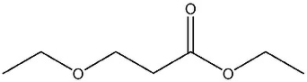 |
| Product Type | Slow-evaporating ether ester solvent for industrial and coating applications |
| Typical Specifications | Appearance: Clear, colorless liquid Assay: ≥99.5% Water: ≤0.05% Ethanol: ≤0.10% Color (Pt-Co): ≤10 Acidity: ≤0.02% |
| Reference Physical Properties | Density at 20°C: approximately 0.95 g/cm³ Boiling range: approximately 165–172°C Flash point: approximately 58–59°C, closed cup Evaporation rate: approximately 0.12, n-butyl acetate=1 Surface tension at 23°C: approximately 27 dyn/cm Solubility in water at 20°C: approximately 2.9 wt% The values above are public reference data and are not batch release specifications. |
| Key Performance Features | EEP combines a relatively slow evaporation rate with good solvency for a broad range of coating polymers, low surface tension and high electrical resistance. In baking coatings, it can support flow, leveling and solvent release while helping reduce defects associated with overly rapid solvent loss. Performance depends on the resin system, formulation ratio, application conditions and bake schedule. |
| Key Applications | Automotive and Industrial Coatings: Used in automotive OEM and refinish coatings, plastics coatings, wood coatings and other industrial finishes to adjust solvency, application viscosity, evaporation and leveling. Inks and Graphic Arts: Used as a formulation solvent in selected packaging inks, screen-printing inks and other non-food-contact graphic arts systems. Compatibility, drying rate, residual solvent and regulatory requirements should be validated for each formulation. Resin and Polymer Processing: Used as a process solvent for resin dissolution, polymer preparation and selected fine chemical operations. Photoresist and Electronics Manufacturing: EEP is used in selected photoresist formulations and electronics solvent systems. For precision cleaning, edge-bead removal, semiconductor or display applications, metal ions, particles, water, nonvolatile residue, filtration and clean packaging must be separately specified and validated. The standard values on this page do not constitute an electronics-grade guarantee. |
| Packaging and Storage | Packaging: Packaging options are subject to the quotation, purchase order and actual supply arrangement. Storage: Keep the container tightly closed in a cool, dry and well-ventilated area. Keep away from heat, sparks, open flames, strong oxidizers and strong bases. Ground and bond containers during transfer, control static discharge and use equipment suitable for flammable liquids. |
| Safety and Transport | EEP is a flammable liquid and vapor. Read the batch-specific SDS before handling and use suitable ventilation, engineering controls and personal protective equipment. Common transport information is UN 3272, Class 3, Packing Group III. Final classification must follow the applicable batch SDS, packaging, transport mode, route and destination regulations. |
| Evaluating EEP for Your Formulation?Tell us your resin system, application, target assay, water, color, acidity, metal-ion or residue limits, packaging and purchase quantity. Royalchem can provide batch-specific COA, SDS and specification confirmation to support solvent selection and supply evaluation for coatings, inks or validated electronics processes. |
| Application | Primary Function | Recommended Checks |
| Automotive and Industrial Coatings | Solvency, flow, leveling and evaporation control | Resin compatibility, application viscosity, bake schedule, flash point, color and water |
| Inks and Graphic Arts | Open time, transfer, film formation and drying control | Resin solvency, printing method, drying rate, residual solvent and food-contact restrictions |
| Resin and Polymer Processing | Process solvent or polymer preparation medium | Assay, water, acidity, impurity profile, recovery conditions and downstream compatibility |
| Photoresist and Electronics | Formulation solvent, cleaning or edge-bead-removal component | Metal ions, particles, water, acidity, nonvolatile residue, filtration and clean packaging |
| What is EEP solvent? | EEP is the common abbreviation for Ethyl 3-Ethoxypropionate, CAS 763-69-9. It is a clear, colorless, slow-evaporating ether ester solvent used in coatings, inks, resin processing and selected electronics applications. |
| Why is EEP used in coating formulations? | Its combination of solvency, relatively slow evaporation, low surface tension and high electrical resistance can help control viscosity, flow, leveling and solvent release. Final performance must be validated in the actual resin and application system. |
| Can this standard grade be used directly in semiconductor or display cleaning? | Not on the basis of assay and water alone. Electronics processes commonly require defined limits for metal ions, particles, nonvolatile residue, filtration and packaging cleanliness. Use should follow an agreed electronics-grade specification and customer process validation. |
| Is EEP universally VOC-exempt or a green solvent? | It should not be marketed as universally VOC-exempt or green. Regulatory treatment and environmental performance depend on jurisdiction, application, formulation-level VOC calculations, workplace exposure controls, emissions management and lifecycle criteria. |
| Can EEP directly replace PMA or PGMEA? | A one-for-one substitution should not be assumed. Differences in solvency parameters, evaporation rate, water solubility, surface tension and flash point require compatibility, viscosity, leveling, drying and film-performance trials. |
| How is EEP transported? | A commonly published classification is UN 3272, Class 3, Packing Group III. The actual declaration must follow the corresponding batch SDS, packaging, transport mode, route and destination regulations. |


