


- All
- Product Name
- Product Keyword
- Product Model
- Product Summary
- Product Description
- Multi Field Search
 |
BTC Industrial Grade, Assay ≥99.5%
Royalchem
32315-10-9
| Product Name | Triphosgene (BTC) Chemical Name: Bis(trichloromethyl) Carbonate Synonym: Carbonic Acid Bis(trichloromethyl) Ester |
| CAS Number | 32315-10-9 |
| EC Number | 250-986-3 |
| Molecular Formula and Weight | C3Cl6O3 (Molecular Weight: 296.73) |
| Chemical Structure | 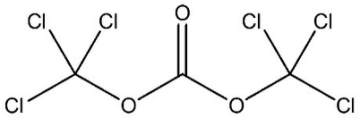 |
| Product Type | Crystalline carbonylating and chloroformylating reagent; phosgene substitute |
| Typical Specification | Appearance: White crystalline solid Assay: ≥99.5% Loss on Drying: ≤0.5% Melting Point: 79.5–80.5°C Acidity: ≤0.1% |
| Reaction Characteristics | Triphosgene is a crystalline carbonylating reagent. On a theoretical equivalent basis, 1 mol of triphosgene corresponds to 3 mol of phosgene. Actual charge ratios, reaction conditions, off-gas treatment, and scale-up parameters must be established through process validation and a site-specific safety assessment. Its solid form can facilitate metering and closed-system charging, but does not make the substance low-hazard. |
| Key Applications | Pharmaceutical and Fine Chemical Synthesis: Used in carbonylation, chloroformylation, chlorination, and dehydration chemistry, including routes to chloroformates, isocyanates, ureas, carbamates, acid chlorides, and other carbonyl-containing intermediates. Agrochemical Intermediates: Used in selected routes to carbamate, isocyanate, and other crop-protection intermediates. Suitability depends on the reaction route, impurity controls, and regulatory requirements. Polymer Chemistry: Used in the preparation of selected polycarbonates, amino acid N-carboxyanhydrides, and related monomers or polymers. Organic Synthesis Reagent: Used as a phosgene substitute in selected coupling, cyclization, and carbonyl-introduction reactions under appropriately controlled professional conditions. |
| Packaging and Storage | Packaging: Supplied in tightly closed, moisture-resistant packaging suitable for the applicable dangerous-goods classification. Available pack size is subject to the quotation, order, certified packaging documentation, and actual supply arrangement. Storage: Keep the container tightly closed in a cool, dry, protected-from-light, well-ventilated, and access-controlled area. Protect from moisture and keep away from heat and incompatible materials. Specific temperature, inert-gas protection, and shelf-life requirements must follow the SDS and specification for the supplied batch. |
| Hazard and Handling Notice | Triphosgene is fatal if inhaled and causes severe skin burns and eye damage. Contact with moisture or exposure to excessive heat may release toxic and corrosive gases, including phosgene and hydrogen chloride. Use is restricted to trained professionals with an appropriate closed system, local exhaust ventilation, off-gas treatment, and emergency controls. Review the SDS for the supplied batch and complete a process risk assessment before use. |
| Transport Information | Common transport classification: UN 2928; Toxic solid, corrosive, organic, n.o.s.; Class 6.1 with subsidiary hazard Class 8; Packing Group II. The final proper shipping name, classification, packaging, and declaration requirements must be confirmed against the SDS for the supplied batch, certified packaging, transport mode, route, and destination regulations. |
| Evaluating a Triphosgene Supply or Process?Tell us your target reaction, purity and impurity requirements, packaging, purchase quantity, destination, and end use. Royalchem can provide batch-specific COA, SDS, specification confirmation, and dangerous-goods transport documentation to support your sourcing assessment. Process suitability, safety controls, and regulatory compliance must be confirmed by the customer for its own facility and intended use. |
| Application Area | Primary Function | Items to Confirm |
| Pharmaceutical and Fine Chemical Synthesis | Carbonylation, chloroformylation, or carbonyl-group introduction | Assay, acidity, loss on drying, impurity profile, reaction yield, and downstream quality requirements |
| Isocyanates and Carbamates | Construction of isocyanate or carbamate functionality | Raw-material compatibility, equivalents, temperature control, off-gas treatment, and residual controls |
| Agrochemical Intermediates | Carbonylating reagent for selected crop-protection routes | End use, impurity limits, regulatory applicability, and scale-up risk |
| Commercial Production and Transport | Industrial charging and dangerous-goods supply | Closed charging, local exhaust, off-gas treatment, certified packaging, UN classification, and carrier acceptance |
| What is triphosgene? | Triphosgene is the common name for bis(trichloromethyl) carbonate, also known as BTC, CAS 32315-10-9. It is a crystalline carbonylating and chloroformylating reagent. |
| Is triphosgene safer than phosgene? | Its solid form can make weighing, transport, and closed-system charging more manageable than handling phosgene gas. However, triphosgene remains highly toxic by inhalation and corrosive, and it may release phosgene under heat, moisture, or reaction conditions. It must not be described or treated as a non-toxic or inherently safe reagent. |
| What is the theoretical equivalence between triphosgene and phosgene? | Theoretically, 1 mol of triphosgene corresponds to 3 mol of phosgene equivalents. The actual charge must be determined from the reaction mechanism, raw-material purity, conversion, and a validated process rather than theoretical equivalence alone. |
| Which reactions use triphosgene? | Typical uses include carbonylation, chloroformylation, chlorination, dehydration, and selected coupling or cyclization reactions. It can be used in routes to isocyanates, chloroformates, ureas, carbamates, acid chlorides, and other carbonyl-containing intermediates. |
| How should triphosgene be stored? | Keep it tightly closed, dry, protected from light, and in a cool, well-ventilated, access-controlled area away from heat and incompatible materials. Follow the batch-specific SDS and supplier specification for temperature, inert-gas protection, and shelf life. |
| Which documents can Royalchem provide? | Royalchem can provide the available COA, SDS, specification confirmation, and dangerous-goods transport documents for the relevant batch and order. Please state any additional impurity, packaging, end-use, or destination-market requirements when requesting a quotation. |


